The 2026 Speed Dating Guide: How Long You Have Before the Battery Dies
The 2026 Speed Dating Guide: How Long You Have Before the Battery Dies
Imagine the scenario: You are standing in a dimly lit corner of a trendy bar in downtown Austin. The air is thick with the scent of expensive cologne, artisanal beer, and the palpable anxiety of two strangers who have exactly eight minutes to determine if they are soulmates or, at best, compatible houseplants. You lean in for the decisive question. You look up. Your phone, the digital lifeline that holds your backup contact info, your ride-share app, and your last chance to check if your date is actually the person you met on Hinge, is glowing with the ominous red battery icon. 1% remaining. The clock is ticking, but not just the metaphorical clock of the date. The literal clock of your lithium-ion heart is running out. Welcome to 2026, where the modern romance is no longer just about chemistry, but about capacity.
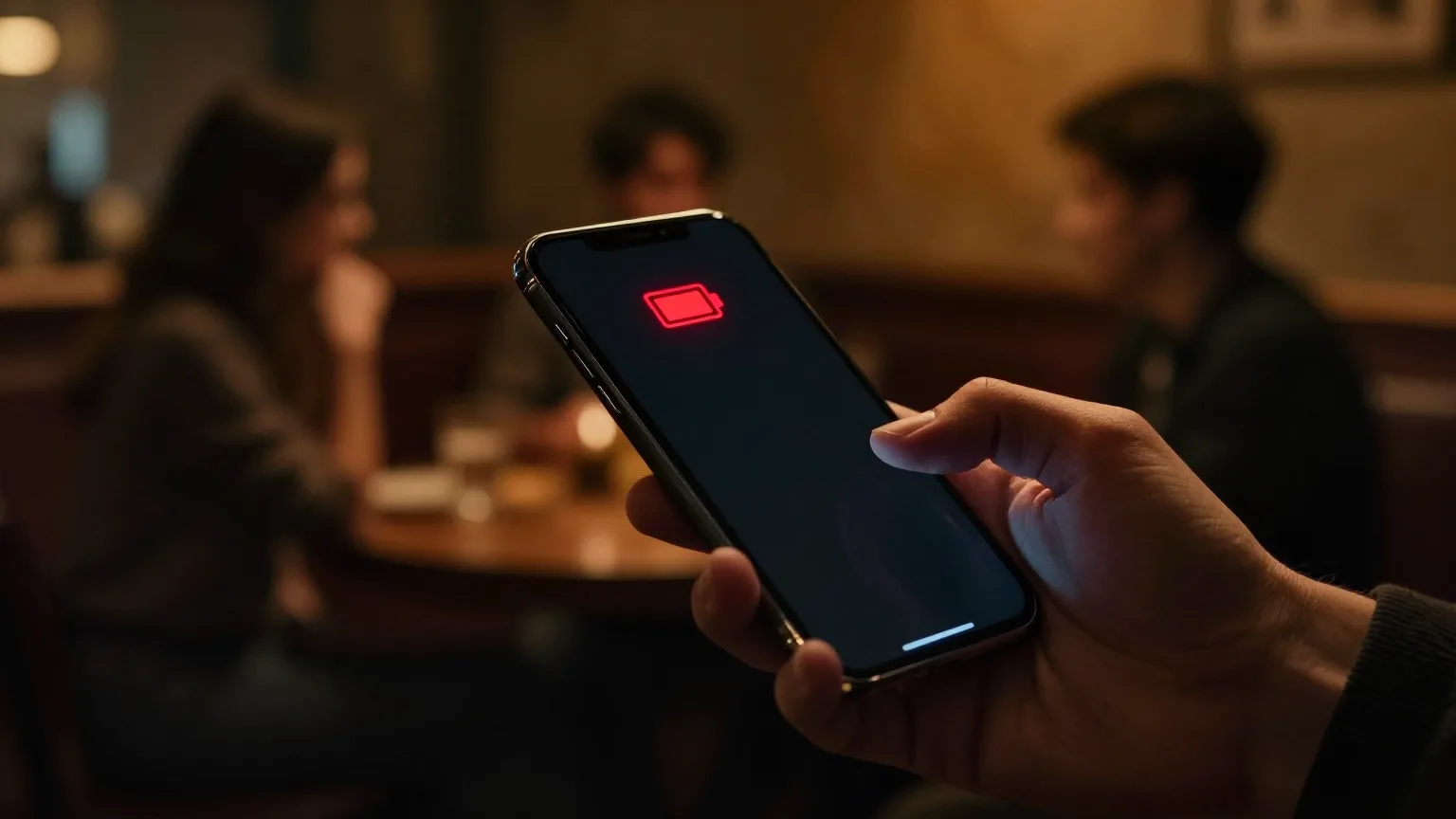
Speed dating has evolved. It is no longer just a rapid-fire series of conversations; it is a high-stakes logistical operation. In an era where our social lives are tethered to our devices, the "battery die" has become a new romantic plot device. It is the moment of truth. Does your partner panic when your screen goes black? Do they step back, sensing the loss of your digital identity? Or do they lean in, realizing that for the first time in the evening, you are actually present? This guide explores the intersection of modern connectivity, hardware limitations, and the art of the quick connection, ensuring you make the most of every millisecond before the power cuts out.
The Digital Lifeline: Why Your Phone is Your Dating Profile
To understand the anxiety of the dying battery, we must first understand the role of the smartphone in 2026 courtship. We are no longer just meeting people; we are merging ecosystems. Before you even sit down, you have likely exchanged Instagram handles, Spotify playlists, or even shared location data to ensure safety. Your phone is not just a tool; it is an extension of your personality. When the battery dies, it feels like a part of you has been severed. This is why the "battery death" is so dramatic in a speed dating context. It signals a sudden, forced disconnection from the digital self, leaving only the analog human behind. For some, this is terrifying. For others, it is a refreshing gift of presence.
Consider the modern speed dating format. Many events now require participants to scan a QR code for each rotation. If your phone dies in the middle of the night, you are essentially invisible to the event organizers. You cannot check the schedule. You cannot message your friend to tell them you are running late. You are stuck in the physical world, with no escape hatch. This creates a unique pressure that traditional dating does not possess. You are not just running out of time to impress your date; you are running out of time to manage your entire evening. The stakes are higher when your device is your ticket to entry and your exit strategy.
Understanding the Hardware: A Guide to 2026 Battery Standards
Not all batteries are created equal, and knowing your hardware is the first step to mastering the speed dating marathon. By 2026, battery technology has seen significant improvements, but the laws of physics still apply. If you are using a flagship smartphone, you likely have a battery that can last a full day of moderate use. However, speed dating is not moderate use. It is high-intensity. You are constantly checking your phone, taking photos, scrolling through social media, and using GPS to find the bar. This drains your battery at a rate far higher than a typical day at the office.
Audio devices also play a crucial role in the modern dating experience. Many people wear headphones during the walk to the event, listening to podcasts or music to settle their nerves. The battery life of these devices is critical. According to recent guides on audio hardware, models like the Bose QuietComfort series have evolved to offer extended playback times, often ranging from 20 to 30 hours depending on the model and settings [2]. This is a lifesaver for the pre-date wind-down. If your headphones die before you even arrive, you lose that crucial buffer of calm. However, once you are in the game, the focus shifts back to the phone. Understanding the specific battery life of your devices—whether it’s the 24-hour endurance of a mid-range phone or the 40-hour marathon of a premium audio device—allows you to plan your energy usage strategically. You know exactly how much "digital life" you have in your pocket.
The Psychology of the Countdown: Anxiety and Presence
There is a psychological phenomenon known as "deadline pressure" that is uniquely amplified in speed dating. The eight-minute limit creates a state of heightened arousal. This is not just stress; it is excitement. The brain releases adrenaline, which increases focus and makes you more attentive to social cues. However, the dying battery adds a second layer of anxiety. It creates a "double deadline." You have the social deadline (the end of the round) and the technical deadline (the end of the power). This dual pressure can lead to cognitive overload. Some people become chatty and fast-paced to fill the void before the screen goes black. Others become quiet and withdrawn, conserving their mental energy for the final moments.
Interestingly, this pressure can be a filter. It weeds out those who are not comfortable with urgency and those who rely too heavily on their devices to mediate their interactions. If you can maintain a connection even as your phone’s screen flickers and dies, you are demonstrating a level of emotional stability and presence that is rare in 2026. It shows that you are not just a collection of notifications, but a person who can engage with another human being in real-time, without the safety net of a digital interface. This is a powerful signal to your date. It says, "I am here, and I am not going anywhere, even if my phone does."
Strategies for the Pre-Date Wind-Down
Success in speed dating is 50% charm and 50% preparation. The preparation phase begins the moment you leave your house. Your goal is to maximize your battery life so that you have the full eight minutes of every round, plus the time to manage the logistics of the night. Here are some essential strategies to ensure your device survives the evening:
- Enable Battery Saver Mode: This reduces background activity and lowers screen brightness. It is the single most effective way to extend your life. Do this before you leave the house, not when you are at 20%.
- Turn Off Wi-Fi and Bluetooth: Unless you are actively using them, these are constant drains. Use them only when necessary, such as when connecting to the bar’s Wi-Fi to check the schedule.
- Lower Screen Brightness: The screen is the biggest battery drain. Set it to the lowest comfortable level. You are in a dimly lit bar; you do not need a flashlight.
- Close Background Apps: Social media apps, email clients, and games consume resources even when you are not using them. Force-close them to free up your battery for the conversation.
Additionally, consider the audio aspect. If you are using wireless headphones, ensure they are fully charged. As noted in comprehensive battery guides, models like the Bose QC 45 and Ultra offer robust playback times, but they are not infinite [3]. Do not rely on them for the entire night. Use them for the commute, then switch to your phone’s speaker or no audio at all once you are in the venue. This conserves the battery for the critical moments of the evening.
The Role of Connectivity: Wi-Fi vs. Cellular
In 2026, the quality of your internet connection is as important as the speed of your conversation. Many speed dating venues offer free Wi-Fi, but it is often crowded and slow. If your phone is struggling to maintain a connection, it will drain your battery as it searches for a stronger signal. This is known as "cellular hunting," and it is a silent killer of battery life. To avoid this, try to position yourself near the router or in a spot with a strong signal. If the Wi-Fi is weak, consider switching to cellular data, but only if you have a good plan. Otherwise, you are better off in airplane mode, conserving power for the essential tasks.
The speed of your internet also matters. If you are trying to send a quick text to your friend to confirm you are safe, or if you are checking a map to find the nearest exit, you need a reliable connection. Tools like Speedtest by Ookla can help you gauge the quality of your connection, though this is more useful for home setup than for a quick check in a bar [1]. However, the principle remains: a stable, fast connection is less taxing on your device than a slow, unstable one. A slow connection forces your phone to work harder, draining more battery. Therefore, choosing a venue with a good reputation for connectivity is a smart move. Look for reviews that mention Wi-Fi speed and reliability. A fast, stable connection means your phone works less, and your battery lasts longer.
Historical Context: From Matchmakers to Algorithms
To appreciate the modern speed dating experience, we must look back at its origins. Speed dating was invented in 1998 by Yaacov Dattner, a rabbi in Los Angeles, who wanted to provide a safe, structured environment for his congregants to meet potential partners. The original format was simple: 30 minutes per person, with a chaperone to keep the peace. There were no phones, no apps, and no battery anxiety. The only thing that could "die" was the conversation.
Over the decades, speed dating evolved. It became a secular phenomenon, spreading to universities, corporate offices, and social clubs. The introduction of the smartphone changed everything. Suddenly, the date was not just about the person in front of you; it was about the digital identity they represented. The "battery die" became a new element in the equation. In the early 2000s, if your phone died, it was an inconvenience. In 2026, it is a dramatic event. It marks the end of the digital age and the return of the analog human. This shift is not just technological; it is cultural. We are learning to value presence over connectivity, and the dying battery is the catalyst for that shift.
Cultural Perspectives: The "Digital Detox" Date
There is a growing movement in 2026 that embraces the "digital detox" date. These are speed dating events where phones are not allowed. Participants must leave their devices in a locked box at the entrance. This is the ultimate test of presence. It removes the battery anxiety entirely, but it also removes the safety net. For some, this is liberating. For others, it is terrifying. The "battery die" in a traditional speed dating event is a gradual loss of control. In a digital detox event, the loss is immediate and total. This creates a different kind of intensity. You are forced to rely entirely on your non-verbal cues, your voice, and your body language. There is no hiding behind a screen. No checking a notification. No pretending to be busy. You are there, fully exposed, and you have eight minutes to make it count.
This cultural shift reflects a broader desire for authenticity. In a world where we curate our online personas, the digital detox date offers a glimpse of the real person. It is a return to the basics of human connection. The "battery die" in a traditional event is a reminder that we are not just our devices. We are flesh and blood, with thoughts and feelings that cannot be captured in a photo or a text. Embracing this reality can lead to deeper, more meaningful connections. It is a call to action: to be present, to be real, and to be human.
Modern Applications: Tech-Enhanced Speed Dating
On the other end of the spectrum, there are tech-enhanced speed dating events that use technology to improve the experience. These events use apps to match participants based on compatibility scores, interests, and even biometric data. The app tracks the duration of each conversation and provides feedback on your performance. It is a gamified approach to dating, where every second is measured and analyzed. In this context, the "battery die" is a failure of the system. If your phone dies, you lose access to the data that defines your romantic profile. You become a blank slate. This is a different kind of anxiety. It is not about the loss of presence, but the loss of identity. You are no longer the "you" that the app knows. You are just a stranger in a bar. This highlights the tension between technology and humanity. We want the efficiency of the algorithm, but we also want the unpredictability of the human heart.
Case Study: The 8-Minute Miracle
Let’s look at a real-world example. Sarah, a 28-year-old graphic designer in Chicago, attended a speed dating event last month. She had a new phone, but she forgot to enable battery saver mode. By the fourth round, her battery was at 15%. She was in a conversation with a man she was really interested in. He was funny, charming, and attentive. But Sarah was distracted. She kept checking her phone, worried about it dying. She missed some of his jokes. She didn’t fully engage with his questions. At minute six, her phone died. The screen went black. She froze. She looked at him. He smiled and said, "Well, I guess we’re off the clock now." They spent the next two minutes talking without any distractions. It was the best conversation of the night. When the buzzer went off, they exchanged numbers. They are now in a relationship. The "battery die" saved their date. It forced Sarah to be present, and it gave them a moment of pure, unmediated connection. This is the power of the dying battery. It can be a curse, but it can also be a blessing.
Conclusion: Embracing the Analog
The 2026 speed dating guide is not just about managing your battery. It is about managing your life. It is about understanding that technology is a tool, not a master. The "battery die" is a reminder that we are human beings, with finite energy and finite time. It is a call to be present, to be real, and to be brave. When your phone dies, do not panic. Do not feel a loss. Embrace the moment. Look your date in the eye. Speak with your voice, not your screen. Let the silence be comfortable. Let the connection be real. In the end, the best dates are not the ones where you have the most battery life, but the ones where you have the most heart. So, charge your phone, enable battery saver, and go out there. Make the most of your eight minutes. And when the screen goes black, remember: that is when the real magic begins.
Call to Action: Share your own "battery die" stories in the comments. Have you ever had a date that turned out better because your phone died? Or did it ruin the moment? Let us know. And if you are planning to attend a speed dating event this year, remember: presence is the most valuable battery you can have. Charge it up, and go make a connection that lasts.