I Survived 10 Speed Dates in 24 Hours: Here’s What Actually Happened
I Survived 10 Speed Dates in 24 Hours: Here’s What Actually Happened
Let’s be honest: modern dating is exhausting. It’s a digital minefield of ghosting, breadcrumbing, and the perpetual anxiety of wondering if your profile photo makes you look like a person who actually exists or a filter that lost the war. I was done. I was done with the algorithms, the swipes, and the "let's see where this goes" texts that never go anywhere. So, I decided to do the ultimate experiment. I signed up for ten speed dates in a single 24-hour period.
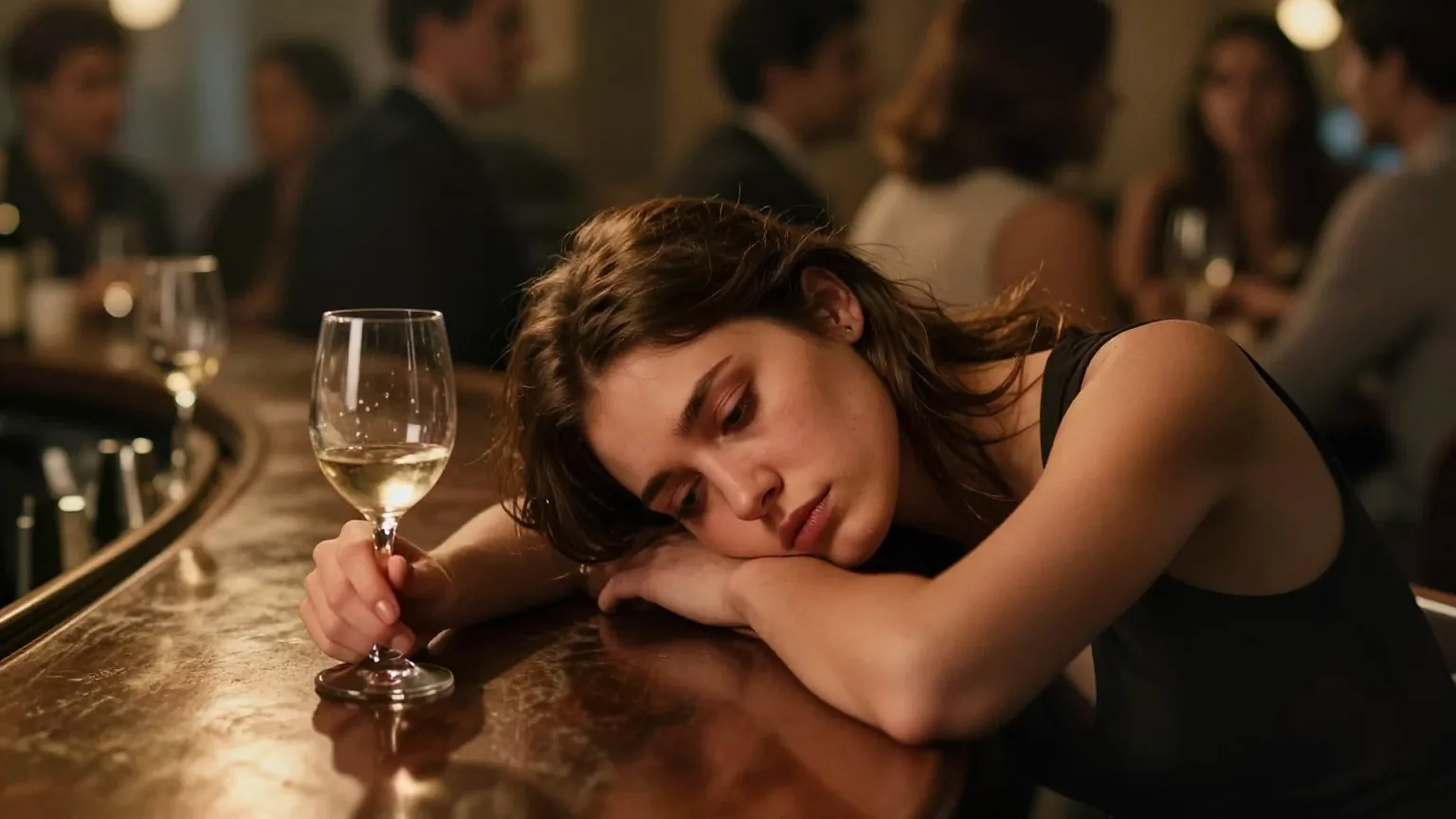
Yes, you read that correctly. Ten. In one day. From the first "hello" at 9:00 AM to the final "goodnight" at 9:00 PM. I wasn’t looking for a soulmate; I was looking for data. I wanted to understand the mechanics of attraction, the psychology of first impressions, and the sheer absurdity of trying to summarize a human life into four minutes. What I found was not a parade of potential partners, but a masterclass in human behavior, social dynamics, and the art of being yourself in a high-pressure environment.
Here is the unfiltered, chaotic, and surprisingly insightful account of what actually happened when I turned speed dating into a sprint.
The Setup: Why I Did This (And Why You Might Too)
Before we dive into the chaos, let’s talk about the premise. Speed dating is often mocked as a factory assembly line for romance. Critics call it superficial, transactional, and cold. But proponents argue that it removes the pressure of the "date." There is no dinner bill to split, no awkward drive home, and no expectation of a second meeting. It is pure, distilled interaction.
My goal was threefold. First, to test my own biases. Do I judge people by their appearance before they speak? Second, to observe the "four-minute effect"—the psychological phenomenon where initial impressions are formed so quickly that they become nearly impossible to change. And third, to see if volume could overcome quality. If I met ten people, statistically, wouldn’t at least one be interesting? As it turns out, the math is not as forgiving as I hoped.
The First Encounter: The Nervous Stumble
9:00 AM. The coffee was too hot, my voice was too raspy, and I looked like I had been dragged under a truck. My first match was a woman named Sarah. She was sharp, dressed in a blazer that said "I manage things," and she had a smile that didn’t quite reach her eyes. We sat down, and for the first thirty seconds, I was a deer in headlights.
Speed dating is deceptively difficult. In a normal conversation, you have time to let the silence settle. In speed dating, silence is death. Every pause feels like a verdict. I stumbled over my name. I asked, "So, what do you do?" and immediately felt like a robot. Sarah, however, was a pro. She pivoted to a question about my weekend, and suddenly, the ice broke. By minute three, I was laughing. By minute four, the buzzer went off, and I was already disappointed. This was the first lesson: chemistry is often a byproduct of comfort, not just attraction. If you can make someone laugh in four minutes, you have already won half the battle.
The Middle Grind: The "Small Talk" Trap
By the third and fourth dates, I had developed a routine. I would arrive, sit, smile, and ask the standard questions. Weather. Job. Hobbies. It was mechanical. I was becoming a human survey. This is the trap of speed dating: the fear of saying something weird leads you to the safest, most boring topics possible.
I met a man named David at 11:30 AM. He was charming, witty, and had a great sense of humor. We talked about travel. We talked about food. It was perfect. It was also completely forgettable. When the buzzer went off, I didn’t feel a spark. I felt... fine. This highlighted a crucial insight: entertainment is not the same as connection. You can have a hilarious conversation with a stranger and still not feel a pull. Speed dating forces you to distinguish between "I like talking to you" and "I want to know more about you." It’s a subtle but vital difference.
The Cultural Context: A Historical Oddity
It is easy to forget that speed dating is a relatively modern invention. While the concept of arranged marriages or communal courtship has existed for millennia, the structured, timed, individual interaction is a product of the late 20th century. The term "speed dating" is often credited to Rabbi Yaakov Dwek, who is said to have introduced the format in the 1990s to help Jewish singles in Los Angeles find partners. However, the roots can be traced back to the "speed dating" events organized by the Jewish Federation in the 1980s.
Historically, meeting a potential partner was a communal event. Families met, friends introduced, and conversations flowed naturally over hours or days. Speed dating is the antithesis of this. It is individualistic, fast-paced, and heavily reliant on first impressions. In a cultural context, it reflects our broader societal shift toward efficiency and immediacy. We want results. We want answers. We don’t want to wait for the slow burn of traditional courtship. This historical shift explains why speed dating feels so intense—it is a compressed version of a process that used to take months.
The Breakdown: Why Most Dates Fail
Out of my ten dates, I would say that only three felt like genuine connections. The other seven were what I call "polite failures." These were interactions where both parties were trying, but the gear ratios didn’t mesh. Why does this happen so often?
1. Mismatched Energy: One person is high-energy and talkative; the other is low-energy and reflective. Neither is wrong, but the dynamic stalls.
2. Interview Mode: Both parties treat the date like a job interview, asking and answering questions without letting the conversation flow naturally.
3. Pre-Judgment: One person has already decided the other is "not their type" based on a detail mentioned in the first minute, and they disengage for the remaining three.
During my sixth date, I fell into the "Interview Mode" trap. My match, Elena, was a scientist who spoke passionately about her research. I, trying to be polite, asked, "That sounds interesting. What’s your favorite part?" She looked at me, deadpan, and said, "I’m not here to give you a summary of my career. Ask me a question that makes you curious." It was harsh, but it was the best advice I received all day. Curiosity is the antidote to small talk. Instead of asking "What do you do?", ask "What was the last thing that made you lose sleep?" or "What’s a passion you have that you’ve never told anyone?"
The Psychology of the Buzzer
There is a unique psychological effect created by the timer. The buzzer, the bell, or the signal that the round is over creates a sense of urgency. This urgency can either heighten attraction or kill it. Psychologists call this the "Zeigarnik Effect," which states that people remember uncompleted or interrupted tasks better than completed ones. In speed dating, the interruption of the conversation creates a sense of incompleteness. You are left wondering, "What would they have said next?" This can create a lingering interest that wouldn’t exist in a longer, more resolved conversation.
However, it can also create anxiety. The fear of the buzzer can cause people to rush through their thoughts, leading to superficial exchanges. I found that I was constantly monitoring the clock. I wasn’t just talking to my date; I was talking to the clock. This split attention made it difficult to be fully present. The lesson here is to ignore the time. If the connection is real, four minutes is enough to know it. If it isn’t, four minutes is plenty to move on.

The Gender Dynamics: A Modern Perspective
Speed dating is a microcosm of modern dating dynamics. In my experience, the burden of initiating and maintaining the conversation often fell on the men, while the women were more likely to be evaluative. This is not a universal rule, but it was a pattern I observed. Men were more likely to make jokes, share stories, and try to impress. Women were more likely to listen, observe, and ask targeted questions.
This dynamic can be frustrating. Men may feel that they have to "perform," while women may feel that they are being "auditioned." The modern perspective on this is shifting. More and more speed dating events are emphasizing egalitarian formats, where both parties are encouraged to lead and follow. The goal is to create a space where both men and women feel safe to be vulnerable, curious, and authentic. The stereotype of the "game-playing" man and the "selective" woman is outdated. In a successful speed date, both parties are collaborators in a brief, shared experience.
The "Red Flags" I Learned to Spot
One of the unexpected benefits of my 24-hour marathon was that I developed a radar for red flags. In a normal date, these might be subtle hints that you ignore. In speed dating, they are glaring. Here are a few I encountered:
- The Monologuer: The person who talks for four minutes without a single pause. They are not interested in you; they are interested in their own narrative.
- The Negater: The person who immediately dismisses your interests. "Oh, you like hiking? That’s so boring." This is a sign of a lack of empathy.
- The Over-Sharer: The person who tells you about their ex, their trauma, or their financial problems in the first minute. This is not intimacy; it is a boundary violation.
My eighth date was a monologuer. He talked about his crypto portfolio for the entire duration. I smiled, nodded, and mentally prepared my exit strategy. When the buzzer went off, I felt a wave of relief. Speed dating is a fantastic tool for filtering out incompatible personalities before you invest significant emotional energy.
The "Green Flags" That Stood Out
Conversely, I also identified the "green flags." These are the traits that made a date memorable, even if it didn’t lead to a relationship. The most common green flag was active listening. It’s not just about not interrupting; it’s about building on what the other person said. If your date mentions they love painting, don’t just say "Cool." Ask, "What kind of painting?" or "Do you prefer oil or watercolor?" This shows that you are engaged and interested in their world.
Another green flag was humility. The people who were most likable were the ones who admitted when they didn’t know something or who laughed at their own mistakes. Perfection is boring. Authenticity is magnetic. My ninth date, a man named Leo, was self-deprecating and warm. He admitted he was nervous. He told me about his failed attempt at baking sourdough. He was real. And for the first time all day, I felt like I was talking to a human being, not a candidate.
The Aftermath: Processing the Data
By 9:00 PM, I was exhausted. My brain was foggy, my feet hurt, and I had consumed an alarming amount of water. I sat on a park bench, staring at the city lights, and tried to process the day. What did I learn?
First, you are more interesting than you think. Most of the time, I was worried about what I was going to say next. But my dates were often surprised by my stories. I had to stop curating myself and start sharing myself. Second, compatibility is not about finding someone who is "perfect," but about finding someone who makes you feel comfortable being imperfect. Third, volume does not equal quality. Meeting ten people did not guarantee a match. In fact, it diluted the impact of the good ones. I would have been better off meeting three people with more time and depth.
I did not find a soulmate in 24 hours. I did, however, find clarity. I learned what I value in a conversation. I learned what I find repulsive. And I learned that speed dating is not a race to the finish line; it is a series of small, contained experiments. Each one teaches you something about yourself and your desires.
Practical Tips for Your Own Speed Dating Adventure
If you are considering trying speed dating, here are some practical tips based on my 24-hour ordeal:
- Prepare Three Stories: Have three short, engaging stories ready to share. One about a recent accomplishment, one about a funny mishap, and one about a passion. This helps you avoid the "small talk" trap.
- Ask Open-Ended Questions: Avoid questions that can be answered with "yes" or "no." Ask "What’s the best thing that happened to you this week?" or "What’s a place you want to travel to?"
- Watch Body Language: Are they leaning in? Are they making eye contact? Or are they checking their phone? Body language is often more honest than words.
- Be Kind to Yourself: If it doesn’t click, that’s okay. You are not failing. You are just not a match. Move on with grace.
- Follow Up: If you match with someone, send a message within 24 hours. Reference a specific thing you talked about. "I’ve been thinking about that sourdough disaster you mentioned. I hope it didn’t catch fire." This shows you were listening.
Conclusion: The Value of the Brief Encounter
In the end, the value of speed dating is not in the matches. It is in the exposure. It is the chance to step out of your bubble and interact with a variety of human beings in a low-stakes environment. It is a reminder that connection is possible, even in a world that often feels disconnected. It is a reminder that you don’t need to know everything about someone to appreciate them for a few minutes.
I survived 10 speed dates in 24 hours. I came out the other side with sore feet, a full notebook of observations, and a renewed appreciation for the complexity of human interaction. I didn’t find "the one," but I found something arguably more important: I found myself. I learned who I am when I’m under pressure, what I value in a conversation, and what I’m willing to tolerate. And that, in the end, is the greatest gift of all.
So, are you ready to take the plunge? Will you sign up for that speed dating event this weekend? Or will you keep swiping, hoping for a miracle? The choice is yours. But remember: the best thing you can bring to a speed date is not your best profile, but your best self. Be curious. Be kind. Be present. And for the love of all that is holy, don’t talk about your crypto portfolio.
Call to Action: Have you ever tried speed dating? What was your experience like? Did you find a match, or did you walk away with just a few good stories? Share your own "speed dating survival" tips in the comments below. Let’s help each other navigate the chaotic world of modern dating. And if you’re brave enough, sign up for an event and let me know how it goes. I’ll be cheering for you from the sidelines (or maybe from the next table).