3 Minutes, 12 Dates: How I Found Love in a Speed Dating Blitz
Imagine sitting across from a stranger. The clock is ticking. You have exactly three minutes to determine if this person is your best friend, a potential life partner, or simply a very good listener who likes jazz. The air is thick with anticipation, the coffee is lukewarm, and your brain is firing on all cylinders, trying to decode body language, eye contact, and the subtle hum of compatibility. This is not a scene from a high-stakes thriller. It is a Tuesday night in a local community center, and I am in the middle of a speed dating blitz.
For the uninitiated, speed dating sounds like a dystopian dystopia of romance—a conveyor belt of human connection where feelings are weighed, measured, and discarded in under four hundred seconds. But after surviving a marathon session of twelve dates, each lasting a mere three minutes, I can tell you that it is far more chaotic, hilarious, and surprisingly effective than it appears. It is a high-pressure environment that strips away the pretenses of modern dating apps and forces you to engage with the raw, unfiltered reality of human interaction. In this post, I will walk you through the whirlwind of that night, the psychology behind why it works, and how you might just find the spark you’ve been looking for in the blink of an eye.
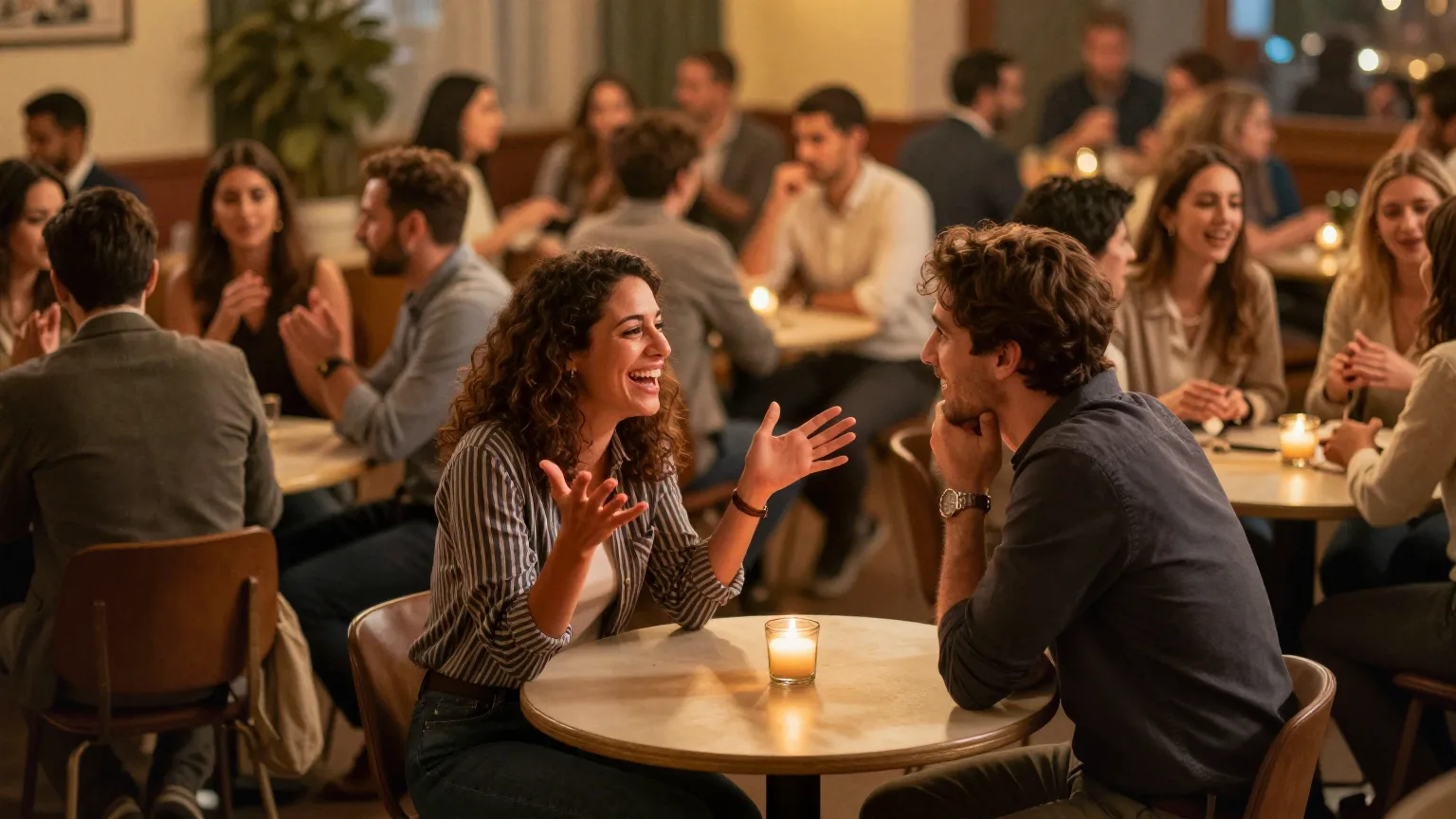
The Anatomy of a Speed Dating Event
To understand the experience, you first need to understand the mechanics. A standard speed dating event is a logistical puzzle. Typically, there is one gender designated as the "host" (who moves) and the other as the "guest" (who stays). Every few minutes, a bell rings—a sound that has become the most stressful and most liberating noise in my social life. When the bell rings, the hosts move to the next table, and the cycle begins again.
In my specific event, the format was slightly different: a "blitz" round. Instead of the traditional one-minute or two-minute slots, we were given three minutes. It sounds like an eternity, but in the context of forming a connection, it is a heartbeat. Twelve dates. Three minutes each. That is thirty-six minutes of intense, focused conversation. By the end, your legs are tired, your brain is foggy, and you are holding a scorecard that looks like a graph of your own emotional volatility. The goal is simple: by the end of the night, you mark "Yes" on the people you want to see again. The organizers then compare notes. If both parties marked each other, you get a match. It is efficient. It is ruthless. And it is oddly beautiful.
Why Three Minutes? The Psychology of the Blitz
Why three minutes? Why not five? Why not ten? The answer lies in the concept of the "thin slice" judgment. Psychological research has long suggested that humans can form accurate impressions of others’ personalities, attractiveness, and trustworthiness within the first few seconds of interaction. The first minute is for breaking the ice and establishing baseline comfort. The second minute is for discovering shared interests or values. The third minute is the "gut check." It is the moment where the initial curiosity either solidifies into interest or fades into polite disinterest.
There is also the element of scarcity. When time is limited, our attention sharpens. We stop trying to impress the other person with long, winding stories about our jobs or our childhoods. Instead, we focus on presence. We listen more actively because we know we only have a fleeting window to capture their attention. This pressure, counterintuitively, often leads to more authentic conversations. People drop their guard because there is no time to maintain a facade. You are just two humans, trying to figure out if the vibe is right before the bell rings.
The First Date: Nerves and Nonsense
Let’s go back to the start. I was sitting at table four. My date, let’s call him Alex, arrived with a wide smile and a slight stumble, as if he had run the last ten feet from the previous table. "Hi! So, what brings you here?" he asked. The question is cliché, but in that moment, it was a lifeline. I felt the classic speed dating anxiety: the fear of saying the wrong thing, the fear of being boring, the fear of being judged.
My first minute was a blur of small talk. We talked about the weather, the quality of the coffee (poor), and the fact that we both had a fear of public speaking. It was safe. It was predictable. But when the second minute began, I took a risk. I asked him, "If you could have dinner with anyone, dead or alive, who would it be and why?" It was a pivot from small talk to substance. Alex’s eyes lit up. He didn’t give a generic answer like "Einstein" or "Steve Jobs." He said, "My grandmother, because she always knew exactly what I needed to hear, even when I was being a teenager and didn’t want to listen."
That was the spark. It wasn’t about the answer; it was about the vulnerability. In three minutes, we had moved from strangers to people who shared a value: the importance of familial connection and wisdom. When the bell rang, I didn’t feel disappointment. I felt a sense of completion. I had learned something about him, and he had learned something about me. I marked "Yes" on my card, not because I was in love, but because I was curious.
The Middle Game: The Art of the Pivot
As the night progressed, the novelty wore off, and the strategy set in. By date five, I had developed a system. I realized that the first thirty seconds were crucial for establishing tone. If I started with "So, what do you do?" I was stuck in a professional interview. Instead, I started using observation-based openers. "I love your jacket, is it vintage?" or "You have the energy of someone who just ran a marathon. Did you?"
These openers served two purposes. First, they showed that I was paying attention to details, which is a form of respect. Second, they allowed the conversation to flow naturally into personal topics without the stiffness of standard interview questions. One of my dates, Sarah, was wearing a pin that said "Read More." We spent the entire three minutes discussing our favorite books and the novels we had abandoned halfway through. It was a rare moment of intellectual connection that felt effortless. We didn’t need to force the conversation; the shared interest did the heavy lifting.
However, not every date was a success. Some were awkward. Some were boring. Some were outright confusing. But the beauty of speed dating is the low stakes. If a conversation isn’t working, you only lose three minutes. In the world of online dating, you might spend weeks messaging someone who turns out to be a ghost or a mismatch. In speed dating, the feedback loop is immediate. You know in real-time if the chemistry is there. It is a form of emotional triage.
Cultural Context: From Tea Parties to Tech Hubs
While speed dating feels like a modern invention, born in the age of apps and algorithms, its roots go back much further. The concept of structured social gatherings for the purpose of finding a mate is ancient. In many cultures, arranged marriages were not just about family alliances but also involved periods of supervised interaction where the couple would speak and observe each other before making a decision. Speed dating is the secular, modern evolution of this concept.
The first known commercial speed dating event was held in Los Angeles in 1998, organized by Rabbi Yaakov Dapra. It was initially designed for Jewish singles, but it quickly gained popularity across demographics. Since then, it has evolved. Today, you can find speed dating events tailored to specific interests: speed dating for wine lovers, for hikers, for gamers, or for people who speak a specific language. This niche approach reflects the modern desire for community and shared identity. It acknowledges that love is not just about individual compatibility, but also about shared values and lifestyle.
In many Asian cultures, speed dating has become a popular alternative to the traditional blind date, offering a safer and more controlled environment for meeting potential partners. In Europe, it is often seen as a fun social activity, less focused on the "hunt" and more on the "fun." Regardless of the cultural context, the underlying principle remains the same: efficiency. In a world where time is our most valuable resource, speed dating offers a way to maximize our chances of finding connection without sacrificing our entire free time.

The Myth of "Instant Chemistry"
One of the biggest misconceptions about speed dating is that it requires "instant chemistry." People often walk into these events expecting to feel a lightning bolt of attraction. If they don’t, they assume they failed. But this is a flawed metric. Chemistry is not just physical attraction; it is intellectual resonance, emotional safety, and shared humor. Sometimes, the spark is subtle. It is the way someone laughs at your joke. It is the way they listen when you speak. It is the way they make you feel seen.
During my blitz, I met a man named David. He was quiet, reserved, and not what I would traditionally consider "charming." But when I asked him about his passion for photography, his eyes changed. He spoke with a passion that was infectious. He described the world not as he saw it, but as he felt it. We didn’t have a flirty banter. We didn’t have a rapid-fire exchange of witty one-liners. But we had a connection. When the bell rang, I felt a pang of loss. I marked "Yes" not because I was in love, but because I wanted to know more. I wanted to see if that quiet passion could sustain a relationship. And it did. We met for coffee the following week, and it was the best date I had had in years.
This experience taught me that speed dating is not about finding the perfect person in three minutes. It is about finding the person who makes you want to learn more. It is about identifying the potential, not the perfection.
Handling Rejection: The Silver Lining
Let’s be honest. Speed dating is a rejection machine. You are going to be turned down. You are going to turn people down. It is part of the process. But there is a strange freedom in this. When you are on a speed dating card, you are not being judged on your entire life, your history, or your future. You are being judged on a three-minute snapshot. If someone doesn’t mark you, it doesn’t mean you are unlovable. It means the vibe didn’t match in that moment. It is objective, not personal.
At first, I felt stung when I saw "No" on my card for a date I thought went well. But as the night went on, I realized that rejection is data. It helps you understand your own patterns. Maybe I am too intense for some people. Maybe I am too quiet for others. Maybe I am not the right fit for people who value status over substance. Each "No" is a step closer to the right "Yes." It is a process of elimination. And in a world where dating apps can feel like a black hole of endless options, the finite nature of speed dating is a blessing. You only have twelve chances. You make the most of them.
Modern Applications: Beyond Romance
While speed dating is most commonly associated with romance, its principles have been applied in other areas of life. Networking events, for example, often use a speed networking format. Professionals rotate through short conversations to build a broad network of contacts quickly. It is a way to break out of the echo chamber of your immediate social circle. You meet people from different industries, different backgrounds, and different perspectives. It fosters creativity and innovation.
Even in the realm of friendship, speed dating can be useful. If you are new to a city, joining a "speed friendship" event can help you build a social circle quickly. You meet people who share your interests, and you can gauge compatibility in a low-pressure environment. It is a way to combat the loneliness epidemic that is affecting many modern societies. By creating structured opportunities for connection, we can overcome the barriers of shyness and social anxiety.
Furthermore, the skills learned in speed dating are transferable. Active listening, asking open-ended questions, reading body language, and managing time are all valuable skills in any professional or personal interaction. Speed dating forces you to be present. It forces you to be curious. It forces you to be authentic. These are skills that will serve you long after the bell has rung.
The Aftermath: What Happens After the Bell?
So, how did it end? After twelve dates, I handed in my scorecard. I had marked "Yes" on four people. I was hopeful, but not expecting much. A week later, I got an email. It said, "You have a match!" My heart skipped a beat. I checked the name. It was David, the quiet photographer. We exchanged emails, then phone numbers, then met for coffee. That coffee turned into dinner. That dinner turned into a weekend trip. And that weekend trip turned into a relationship that has lasted for two years.
Looking back, I realize that the three minutes were just the seed. The real work happened in the weeks that followed. But without those three minutes, I never would have known to plant the seed. Speed dating gave me the permission to be vulnerable, to be curious, and to take a chance. It gave me a structured environment to meet someone who was looking for the same things I was. It removed the guesswork and the anxiety of the first meeting. We already knew we liked each other. We already had a foundation. All we had to do was build on it.
Conclusion: Embrace the Chaos
Speed dating is not a magic bullet. It is not a guarantee of love. It is a tool. A tool that can help you navigate the complex landscape of modern romance. It is efficient, it is fun, and it is surprisingly effective. If you are single and feeling stuck, I encourage you to try it. Go to a speed dating event. Put on your favorite shirt. Bring your best questions. And most importantly, be yourself. You don’t need to be perfect. You just need to be present. You just need to be curious. You just need to be willing to take three minutes to change your life.
The bell will ring. The moment will pass. But the connection you make will last. So, next time you hear the bell, don’t panic. Listen. Speak. Connect. And who knows? You might just find the person you’ve been looking for in the blink of an eye.
Call to Action
Ready to take the plunge? Search for a local speed dating event near you. Check out community boards, social media groups, or dating websites that offer speed dating options. Tell a friend and go together for moral support. And if you have tried speed dating before, I’d love to hear your story. Did you find love? Did you find a great friend? Did you just find a great story to tell? Share your experience in the comments below. Let’s celebrate the chaos, the connections, and the courage it takes to say "yes" to a stranger in three minutes. Happy dating!