Practical Insights: speed dating
Speed Dating: The Art of the 3-Minute Impression
Imagine this: You are sitting across from a stranger. The clock is ticking. You have exactly three minutes to determine if this person is your future partner, your future friend, or your future "why did I even sign up for this?" story. Your heart is pounding, your palms are slightly sweaty, and you are desperately trying to remember if you should ask about their job or their favorite pizza topping first. This is the high-stakes, high-speed world of speed dating.
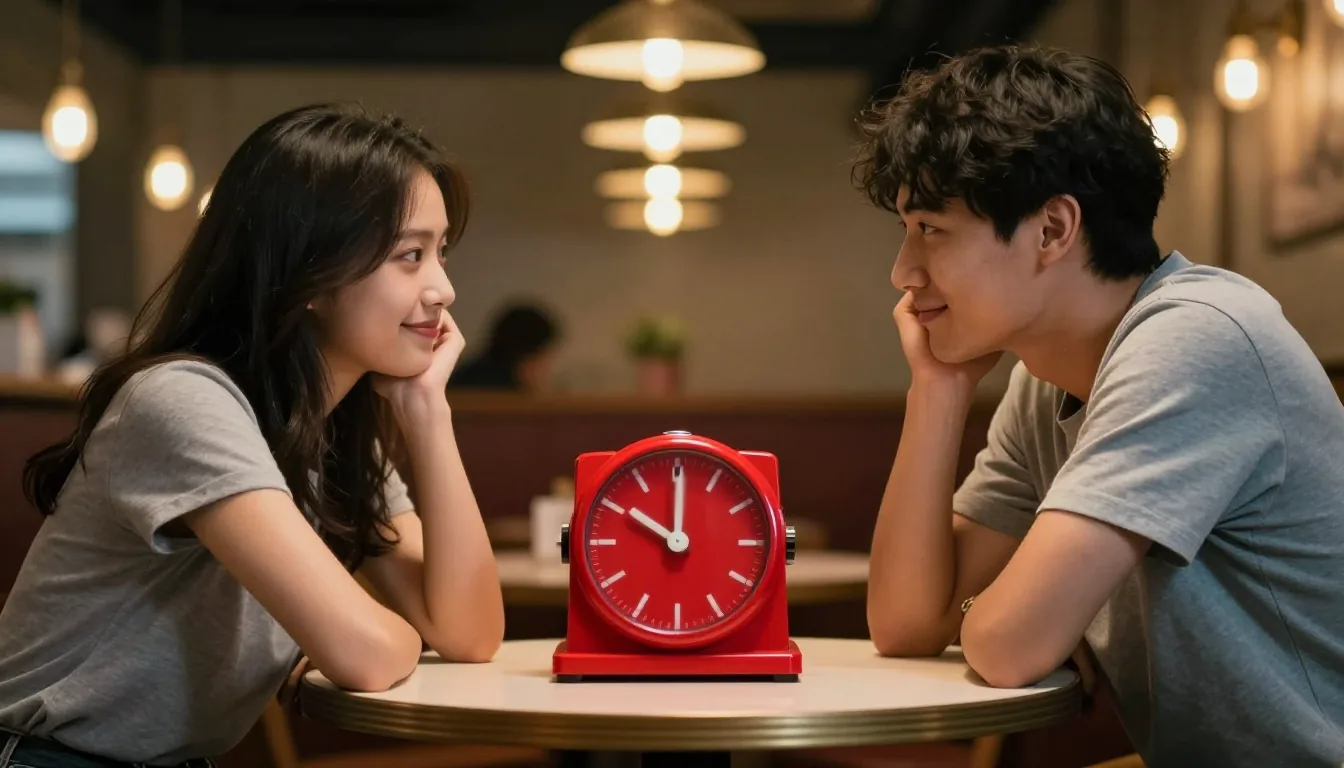
For many, the mere mention of speed dating evokes images of awkward silence, forced small talk, and the dreaded "no" card. But if you step back and look at the mechanics behind it, speed dating is actually one of the most efficient, equitable, and psychologically fascinating social experiments of the modern era. It strips away the pretenses of long, drawn-out dinner dates where you spend two hours discussing the weather and the price of parking, only to realize you have absolutely nothing in common.
In this post, we are going to dive deep into the practical insights of speed dating. We aren’t just looking at it as a party trick; we are analyzing it as a skill set. Whether you are a seasoned dater looking to refine your approach or a skeptic wondering if it actually works, there is a lot to learn here. Let’s break down the strategy, the psychology, and the cultural impact of the modern "lightning round" of romance.
The Brief History of the "Lightning Round"
To understand where we are, we have to look at where we started. While the concept of rapid matchmaking isn’t entirely new, the modern speed dating event as we know it was largely popularized in the late 1990s. The format was designed to solve a specific problem: the inefficiency of traditional dating. In the pre-internet, pre-app era, meeting new people required significant social capital or physical presence in specific venues like bars, churches, or community centers.
The genius of the format lies in its structure. By rotating partners every few minutes, it removes the pressure of "selling" yourself for an hour. Instead, it forces a rapid assessment. Historically, this was a game of numbers. If you met ten people and liked two, you had a 20% success rate in a single evening. Compare that to meeting one person on a traditional date, where the success rate is binary: yes or no. The statistical advantage is clear. Over the last two decades, this format has evolved from a novelty for singles in large cities like New York and London to a global phenomenon, adapting to various demographics, including professionals, seniors, and even niche interest groups like book clubs or hiking communities.
The Psychology of First Impressions
Why does such a short window work? The answer lies in evolutionary psychology and the concept of "thin-slicing." Research suggests that humans are remarkably good at making accurate judgments about personality traits based on very brief observations of behavior. In speed dating, you are essentially engaging in thin-slicing. You are looking for micro-cues: How do they listen? Do they make eye contact? Is their energy level compatible with yours?
However, this also means that you are often judging a highlight reel, not the full movie. The first three minutes are a performance. People tend to present their "best selves," which can lead to a phenomenon known as the "halo effect." If someone is well-dressed, confident, and smiling, we subconsciously attribute other positive traits to them, such as intelligence or kindness, before we even have the data to support those assumptions.
As a participant, your goal is not to be perfectly liked, but to be accurately perceived. This requires a balance between confidence and authenticity. If you try too hard to impress, you risk coming across as inauthentic, which is a major red flag in the long run. The practical insight here is to focus on curiosity rather than performance. When you are curious about the other person, you stop worrying about how you look and start listening. This shift in focus often creates a more genuine connection, which is exactly what you are aiming for.
Mastering the Art of Small Talk
Let’s address the elephant in the room: Small talk is the fuel of speed dating. And for many people, it is the source of their greatest anxiety. "What do I say? What if they don’t like my answer? What if the conversation dies?"
The secret to great speed dating small talk is to avoid the "interrogation mode." Asking "What do you do?" or "Where are you from?" is fine, but it’s a dead end if you don’t follow up. Instead, try the "FORD" method as a baseline, but elevate it with curiosity:
- Family: "Do you have siblings? What was your family like growing up?"
- Occupation: "What’s the most interesting project you’re working on right now?"
- Recreation: "How do you usually spend a rainy Sunday?"
- Dreams: "If you could wake up tomorrow with a new skill, what would it be?"
Notice the difference. The second set of questions invites storytelling and emotion, which creates a connection. The first set invites facts, which creates a resume. The practical insight is to listen for "hooks"—pieces of information that spark your interest. If they mention they just got back from a trip to Japan, don’t just say "Cool." Ask, "What was the most surprising thing about the food?" This shows you are engaged and willing to go deeper, even in a short window.
Body Language: The Silent Conversation
While your words matter, your body speaks louder. In a three-minute interaction, non-verbal cues account for a significant portion of the impression you make. Think of your body language as your brand identity. Are you closed off? Are you fidgeting? Are you leaning in?
Here are a few practical tips for optimizing your physical presence:
- The Open Stance: Keep your arms uncrossed. Crossing your arms can be interpreted as defensive or uninterested, even if you’re just cold.
- Eye Contact: Aim for a comfortable 60-70% eye contact. Staring is creepy; avoiding eye contact is disinterested. The sweet spot shows confidence and attention.
- The Nod: Active listening is visible. Nodding slightly and tilting your head shows you are processing what they are saying.
- Smiling: It sounds cliché, but smiling is the universal signal of approachability. It lowers the other person’s defensive barriers and makes the environment feel safer.
One common mistake people make is mirroring. While mirroring (subtly copying the other person’s posture) can build rapport, doing it too obviously can look like a manipulation tactic. Keep it natural. If they lean back, you can lean back slightly. If they lean in, you can lean in. It’s about creating a rhythm, not a pantomime.
The "No" Card: Reframing Rejection
Perhaps the most stressful part of speed dating is the moment after the buzzer sounds. You have to decide: Do I circle their name? Do I leave it blank? This binary choice can feel incredibly high-pressure. It’s easy to view a blank card as a rejection, but in the context of speed dating, it’s simply data.
Reframing this process is crucial for maintaining your mental health and enjoyment of the event. A "no" is not a judgment on your worth as a person. It is a mismatch of preferences, timing, or chemistry. In a room of 10 to 20 people, it is statistically likely that you will not click with everyone. That is the point of the format. It is a filtering mechanism.
Practical insight: Don’t agonize over the decision. If you are unsure, give yourself a grace period. Sometimes, a connection takes a few seconds to solidify. But if you feel a distinct lack of interest, be honest with yourself. It is kinder to both parties to not circle a name if there is no genuine spark. This honesty respects the time of everyone involved. Remember, you are not looking for a "perfect" person in three minutes; you are looking for someone worth a second date. That is a much lower bar, and a much more realistic one.
Strategies for the Shy and Introverted
Let’s be real: Speed dating can be terrifying for introverts. The constant rotation, the noise, the pressure to perform—all of it can be overwhelming. But here is the good news: Introverts have a secret weapon in speed dating. They are often better listeners.

While extroverts may dominate the conversation with their energy and stories, introverts often excel at asking thoughtful questions and really hearing the answers. This can be incredibly attractive. In a fast-paced environment, the person who actually listens stands out.
If you are shy, preparation is your best friend. Have two or three "go-to" questions ready that you can ask if your mind goes blank. Practice your body language in the mirror. Wear clothes that make you feel confident, not just clothes that look good. And remember, you don’t have to be the loudest person in the room to be the most interesting. A quiet, attentive, and warm demeanor can be just as magnetic as a loud, outgoing one.
Red Flags and Green Flags
In the rush of speed dating, it’s easy to miss the subtle signs that tell you more about a person than their resume ever could. Learning to spot these flags quickly is a valuable skill.
Green Flags:
- Curiosity: They ask you questions and seem genuinely interested in the answers.
- Respect: They respect your boundaries and listen without interrupting.
- Humor: They have a lightness to them. They don’t take themselves too seriously.
- Specificity: They share specific stories rather than generalities. "I went to a museum" is less interesting than "I spent three hours in the Impressionist wing because I love the way Monet uses light."
Red Flags:
- Monologuing: They talk over you and never let you speak.
- Negativity: They spend the entire three minutes complaining about their ex, their boss, or the traffic.
- Lack of Eye Contact: They are constantly checking their phone or looking around the room.
- Over-sharing: They reveal too much too soon, such as deep emotional trauma or financial details, which can feel overwhelming in a first meeting.
Trust your gut. If something feels "off," it probably is. Your intuition is a powerful tool in speed dating, and it’s one that you should not ignore.
The Role of Technology and Modern Apps
While traditional in-person speed dating is still popular, technology has transformed the landscape. Dating apps like Tinder, Bumble, and Hinge have introduced a digital version of speed dating: the swipe. In this model, you have seconds, not minutes, to make a decision based on photos and a brief bio.
This has created a culture of "paradox of choice." With thousands of potential matches, it’s easy to feel like there is always someone better out there. This can lead to a lack of commitment and a tendency to jump from person to person without forming deep connections.
However, technology also has its benefits. Apps allow you to filter for specific interests, values, and deal-breakers before you even meet someone. This can save you time and effort. The practical insight is to use technology as a tool, not a crutch. Use apps to find potential matches, but don’t forget the power of face-to-face interaction. A text conversation is never a substitute for a real conversation. If you match with someone you like, try to move the conversation to a phone call or a coffee date as soon as possible. The magic happens in the real world.
Cultural Perspectives on Rapid Romance
Speed dating is not a monolith; it varies significantly across cultures. In some Western cultures, where individualism and self-expression are highly valued, speed dating is seen as a fun, low-pressure way to meet people. In other cultures, where family approval and long-term commitment are prioritized, the concept of meeting a stranger for three minutes might seem frivolous or even inappropriate.
However, the core human desire for connection is universal. In many Asian cultures, for example, there are "matchmaking parties" that have been practiced for centuries, often with the involvement of family members or community elders. These events serve a similar purpose to modern speed dating: to facilitate introductions in a structured, socially acceptable way.
The difference lies in the context. In many traditional societies, the goal of these events is not just to find a romantic partner, but to build social alliances and ensure family continuity. In the modern Western context, the goal is often more individualistic: to find a partner who shares your values and interests. Understanding these cultural nuances can help you navigate speed dating events with greater empathy and awareness.
After the Buzzer: Managing the Follow-Up
So, you’ve done the event. You’ve filled in your card. You’ve gone home. Now what? This is where many people drop the ball. The follow-up is crucial.
If you circled someone’s name, you are expressing interest. But you are not yet in a relationship. The next step is to reach out. Most speed dating organizers provide a way to exchange contact information if there is a mutual match. If you are matched, send a message. Keep it simple. "Hi, I enjoyed our conversation at the speed dating event last night. I’d love to grab a coffee this week. Let me know if you’re free."
If you are not matched, it’s okay to feel a bit disappointed, but don’t take it personally. The event is a snapshot in time. You never know who you might meet in the future. Keep an open mind. And if you didn’t circle anyone’s name, take that as a sign to reflect on what you’re looking for. Did you feel rushed? Did you not like the group? Use that information to choose a better event next time.
Practical insight: Don’t overthink the follow-up. The ball is in their court. If they are interested, they will respond. If they don’t, move on. There are plenty of fish in the sea, and plenty of events to attend.
Conclusion: Embracing the Chaos
Speed dating is not a perfect system. It is messy, it is fast, and it is sometimes awkward. But it is also a powerful tool for breaking out of your social bubble and meeting new people in a low-stakes environment. The practical insights we’ve discussed—focusing on curiosity, mastering body language, reframing rejection, and spotting red flags—are not just for speed dating. They are skills that will serve you well in every aspect of your life, from job interviews to networking events to making new friends.
The next time you consider a speed dating event, don’t see it as a desperate last resort. See it as an opportunity. An opportunity to practice your social skills, to meet interesting people, and to discover what you really want in a partner. Who knows? You might just find your perfect match in three minutes. Or, even better, you might just have a great night out and a few good stories to tell your friends.
So, put on your best smile, sharpen your questions, and step into the ring. The clock is ticking, but the possibilities are endless. I’d love to hear your experiences with speed dating. Have you ever had a "lightning strike" connection? Or maybe you have a horror story to share? Drop your comments below and let’s chat. Who knows? We might just be speed-dating ourselves into a new community of connection.