I Dated 100 Men in 6 Hours: What Speed Dating Taught Me About Love
Imagine walking into a room where the air is thick with anticipation, nervous sweat, and the faint scent of expensive cologne mixed with stale coffee. You have six hours. One hundred men. And a goal: to find the one person who makes your heart skip a beat, or at least, makes you want to buy them a second drink. It sounds like a scene from a chaotic rom-com, but for me, it was a Tuesday night. I had signed up for the "Ultimate Speed Dating Marathon," a local event that promised efficiency, volume, and a shot at romance in a city where dating apps felt more like a job than a hobby.
When I left the venue, my feet were killing me, my mental battery was at 4%, and I had filled out 100 cards. But what I gained was far more valuable than a date. I gained a masterclass in human behavior, the economics of attraction, and the true nature of compatibility. Speed dating is often dismissed as a game of superficiality, a rapid-fire exchange of "What do you do?" and "Where are you from?" But after surviving the marathon, I realized that in those three-minute windows, we strip away the pretense of long conversations and see the raw, unfiltered essence of who someone is. Here is what my 6-hour, 100-person experiment taught me about love, attraction, and the art of the brief encounter.

The Psychology of the First Three Minutes
To understand speed dating, you have to understand the brain. When you sit down across from a stranger, your limbic system is on high alert. This is the part of the brain responsible for emotions and survival. In the first few seconds, your brain is not analyzing their career trajectory or their political views. It is scanning for safety, symmetry, and scent. This is known as "flashbulb memory" formation, where intense emotional moments are encoded more deeply than neutral ones.
During my marathon, I noticed a distinct pattern. The men who seemed most "perfect" on paper often failed to spark any interest in the first ten seconds. Conversely, those who had a unique laugh, a curious gaze, or a slight quirk in their posture often lingered in my mind long after the bell rang. This aligns with psychological research suggesting that initial attraction is largely driven by non-verbal cues. We are wired to trust our gut feelings, even when they contradict our logical preferences. Speed dating forces you to trust that gut, turning the dating process into a high-stakes test of intuition.
The Economics of Attention and Scarcity
There is a profound economic principle at play in speed dating that mirrors the broader dating market: the paradox of choice. When you have 100 options in front of you, the value of any single option decreases. This is why speed dating can feel so exhausting. You are constantly comparing, constantly calculating the "opportunity cost" of staying with one person versus moving to the next.
In the first hour, I found myself judging everyone harshly. I was looking for flaws to justify moving on. By the fifth hour, however, a shift occurred. The novelty of the new faces had worn off, and I began to value the quality of the interaction over the quantity of the potential. This is a crucial lesson for modern dating. When we swipe endlessly on apps, we create an illusion of infinite supply. Speed dating, by contrast, imposes a hard limit. You cannot swipe left on a person who is sitting three feet away from you. You must engage, or you must consciously choose to disengage. This forced engagement teaches us to appreciate the present moment and the person in front of us, rather than the hypothetical person who might be better around the corner.
The Myth of the "Perfect Match" in a Bottle
One of the biggest misconceptions about speed dating is that it is designed to find your "soulmate." It isn’t. It is designed to find a "spark." There is a massive difference between a spark and a fire. A spark is the initial ignition of interest; a fire is the sustained effort of building a relationship. In my 100 dates, I had maybe five sparks. Of those, perhaps two were worth a follow-up. The rest? They were just friendly interactions with strangers.
I learned that compatibility is not something you can detect in three minutes. You can detect chemistry, yes. You can detect if someone is listening, if they are respectful, and if their energy matches yours. But you cannot detect if they are a good communicator, if they handle conflict well, or if their life goals align with yours. Those are long-game metrics. Speed dating is the audition, not the final interview. Understanding this distinction saved me from the disappointment of expecting deep connection in a shallow format. I stopped looking for depth and started looking for direction. Did this person make me want to know more? That was the only question that mattered.
Non-Verbal Communication: The Silent Language
In a three-minute window, words are limited. You have maybe 50 to 100 words. That means 80% of the communication is non-verbal. During the marathon, I paid close attention to micro-expressions and body language. I noticed that men who leaned in slightly, maintained eye contact for 60-70% of the interaction, and mirrored my posture were the ones I felt most comfortable with. This is the concept of "mirroring," a subconscious behavior that signals empathy and rapport.
Conversely, I noticed that men who checked their phones, looked at the clock, or had their arms crossed were immediately filtered out. It wasn’t a judgment of their character, necessarily, but a judgment of their engagement. If they weren’t present in the moment, they weren’t present for me. This exercise sharpened my ability to read people. I became more aware of my own body language, ensuring that I was open, warm, and attentive. Speed dating is a gym for your social muscles. You get 100 reps of "making a good impression," and by the end, the motion feels natural.
The Role of Vulnerability in High-Stakes Settings
Speed dating is inherently vulnerable. You are exposing yourself to rejection 100 times in one evening. The fear of being "no"ed by a stranger is a unique form of anxiety. I found that the men who handled this vulnerability with grace were the most attractive. They didn’t take rejection personally. They smiled, said "good luck," and moved on with dignity. This resilience is a key indicator of emotional maturity.
I also learned that vulnerability is a two-way street. When I shared a small, honest anecdote about my day or a funny fear, the conversation shifted from surface-level to genuine. It broke the ice. In a high-pressure environment, authenticity is the only differentiator. You cannot fake a connection. The moment you try to curate your personality to fit an "ideal" partner, the chemistry dies. I learned to be my authentic, slightly awkward, highly opinionated self. And surprisingly, that was what resonated. People are tired of perfection. They are looking for a human being.
Cultural Context: From Matchmakers to Algorithms
While speed dating feels modern, the concept of rapid, structured socializing is ancient. In many cultures, arranged marriages or "introductions" served a similar purpose: to quickly assess compatibility based on family, status, and basic personality traits. The difference is that modern speed dating is individualistic. You are choosing for yourself, based on your own criteria, rather than having it chosen for you by elders or community leaders.
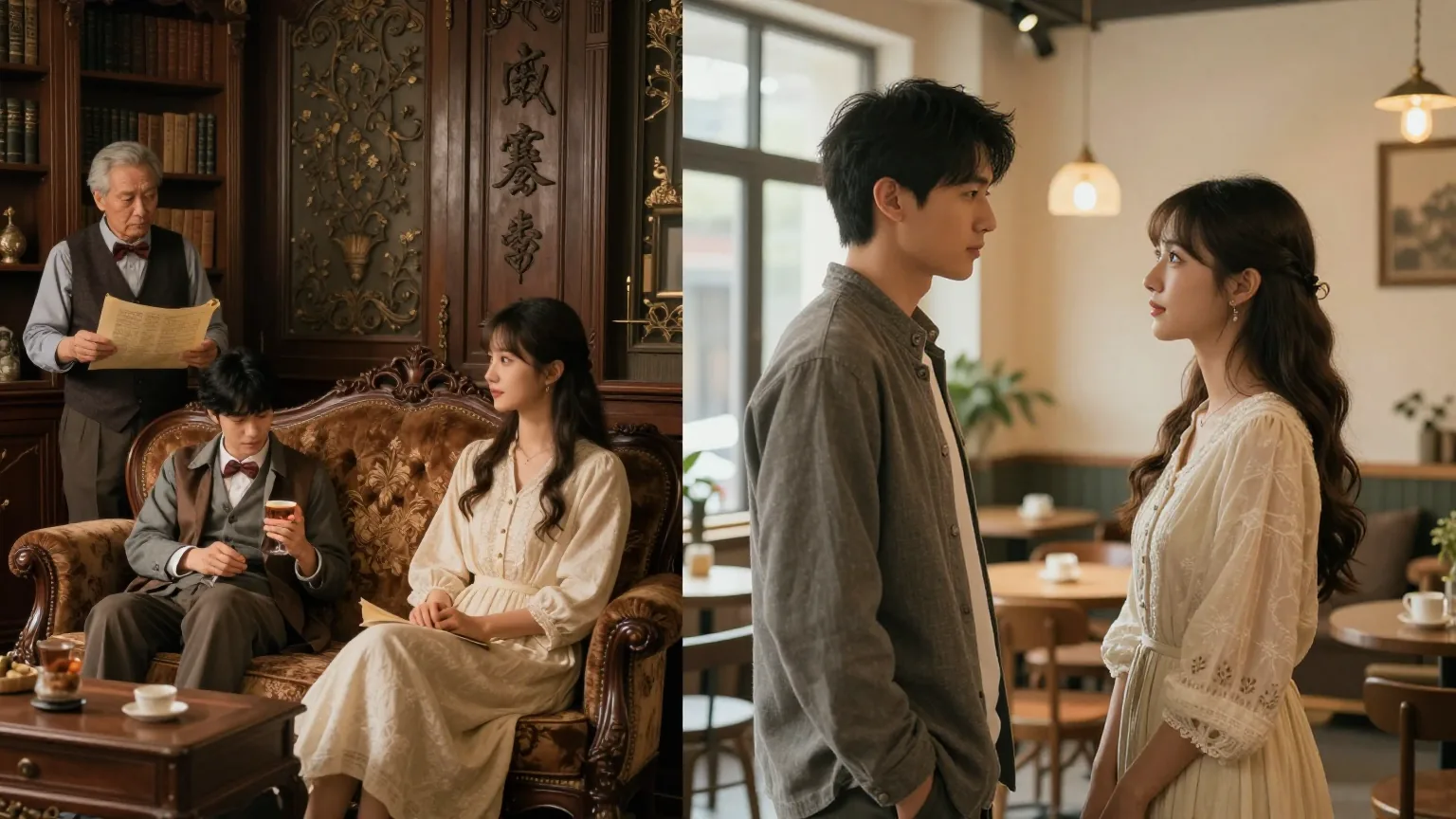
Historically, the "courtship" process took months or years. People lived in close-knit communities where they knew everyone’s reputation. Today, we are isolated in our digital bubbles. Speed dating is a return to the communal aspect of dating, but with a modern twist. It is a social event, a party, a community gathering. The fact that I made friends with other women in the waiting room, sharing war stories and laughing over bad coffee, was just as valuable as the dates themselves. It reminded me that dating is a social activity, not a solitary quest.
The Gender Dynamics of the Speed Dating Room
Let’s address the elephant in the room: the gender dynamics. In most speed dating events, there is a slight imbalance, often with more men than women. This creates a different pressure for each group. Men often feel the pressure to be the "funny one" or the "impressive one," trying to stand out in a sea of similar faces. Women, on the other hand, often feel the pressure to be "selective," fearing that if they are too easy, they will be undervalued, or if they are too strict, they will end up alone.
During my marathon, I noticed that the men who broke the script were the most memorable. The ones who didn’t try to impress me, but instead tried to connect with me. They asked questions about my interests, not my job. They listened to my answers, not just to formulate their next line. This shift in dynamic—from performance to connection—was liberating. It highlighted that the goal of dating is not to win a competition, but to find a partner. Recognizing this shift in mindset, both for myself and in the men I met, was a pivotal moment in my 6 hours.
Techniques for Success: Beyond the Small Talk
If you are considering trying speed dating, here are a few insights from my experience that can help you navigate the chaos. First, prepare two or three open-ended questions. Avoid "Yes/No" questions. Instead of "Do you like travel?" try "What is the most memorable trip you have ever taken?" This invites storytelling, which is where connection happens.
Second, manage your energy. Six hours is a long time to be in "performance mode." I took micro-breaks during the transitions. I drank water. I took deep breaths. I reminded myself that I am in control of my own experience. I can choose to engage or disengage. This mental framing reduced my anxiety significantly.
Third, be kind. Even if you don’t like someone, be respectful. You never know who they might be to someone else. And remember, kindness is attractive. It shows character. In a room full of people trying to impress, being kind and genuine makes you stand out.
The Aftermath: Processing the Data
When I left the venue, I didn’t immediately call anyone. I went home, ate a large bowl of ice cream, and wrote down my notes. I had filled out 100 cards, but I had only marked 5 as "Yes." This is a crucial step that many people skip. They rush to text or call, driven by the adrenaline of the event. I took a step back to analyze my feelings. Why did I like these five? Was it their looks, their personality, or just the fact that they were the only ones who made me laugh? I realized that three of the five were "Yes" because they made me feel safe and heard. The other two were "Yes" because they had a specific hobby I was curious about. This distinction helped me prioritize my follow-ups.
Speed dating gives you data. It gives you a sample size of human interaction that you rarely get in normal life. Use it. Analyze it. Learn from it. It is a gift to know what you like and what you don’t, without the months of dating that usually precede that knowledge.
Modern Applications: Speed Dating in the Digital Age
While physical speed dating events are still popular, the concept has evolved in the digital age. There are now online speed dating platforms where you have 3 minutes on video chat to impress a match. This format removes the physical barrier but retains the time pressure. It is a hybrid model that appeals to introverts who prefer the comfort of their own home but still want the efficiency of speed dating.
Furthermore, the principles of speed dating are being applied in professional networking. "Speed networking" events are becoming popular for job seekers and entrepreneurs. The idea is the same: make a strong first impression, communicate value quickly, and leave a lasting impression. The skills you learn in a speed dating room—active listening, concise communication, reading body language—are transferable to almost every area of life. In a world where attention spans are shrinking, the ability to connect quickly is a superpower.
Conclusion: The Beauty of the Brief Encounter
Did I find "the one" in my 6 hours? No. But I found something more important: clarity. I learned what I value in a partner. I learned how I want to feel when I am around someone. I learned that love is not a lightning strike, but a slow burn that starts with a spark. Speed dating is not the answer to all your romantic woes, but it is a powerful tool for self-discovery and connection.
It teaches us to be present, to be kind, and to be brave. It reminds us that behind every face is a story, and even in three minutes, we can glimpse the beginning of that story. So, if you are feeling stuck in the endless loop of dating apps, consider a change of pace. Sign up for a speed dating event. Go in with no expectations. Listen more than you speak. And remember, the goal is not to find your soulmate, but to find the person who makes you want to write the first chapter. That is where the magic begins. And who knows? Maybe in three minutes, you will find the rest of your life. Or maybe you will just find a good story to tell your friends. Either way, it’s worth the six hours.
Call to Action: Have you ever tried speed dating? What was your most memorable (or disastrous) experience? Share your stories in the comments below! And if you’re looking for local events, check out our latest guide to the best speed dating venues in your city. Happy dating!