I Survived 10 Speed Dates: What I Learned About Love
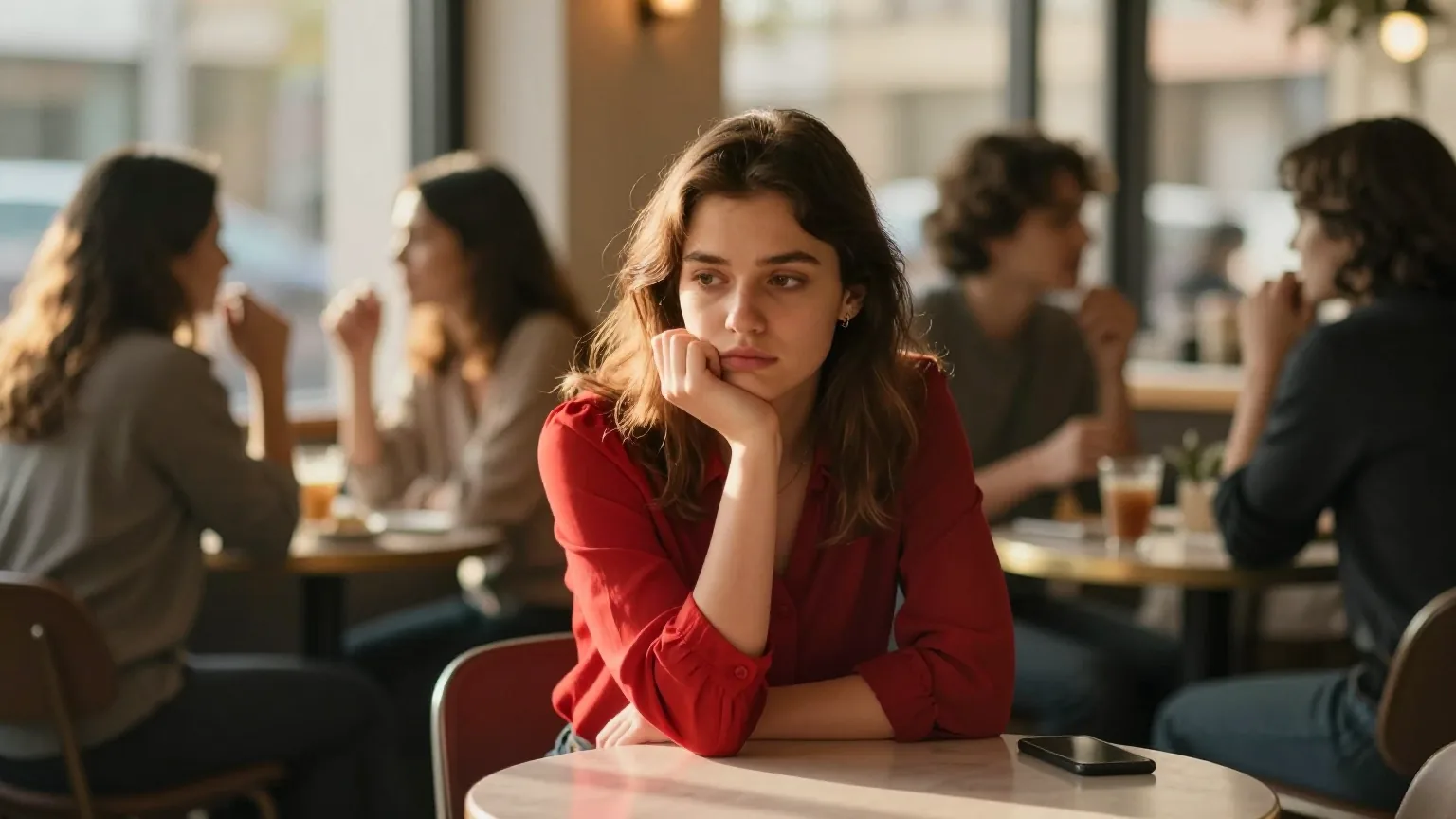
Imagine this: You are sitting across from a stranger. You have exactly four minutes to determine if they are the love of your life, a future best friend, or someone who is going to make you question your life choices for the next decade. Your heart is pounding, your palms are sweating, and the clock is ticking with a rhythmic, unforgiving tick-tock that echoes in your hollowed-out soul. This isn’t a scene from a romantic comedy where the music swells and the lighting dims. This is the reality of modern speed dating, and for one particular weekend, it was my reality. I signed up for ten consecutive dates, not out of desperation, but out of a curious, slightly reckless desire to understand the mechanics of human connection in an era where we swipe left on lives at the speed of light.
Speed dating is often dismissed as a gimmick, a fast-food version of romance where quality is sacrificed for quantity. But after surviving ten rapid-fire interactions, I realized that speed dating is less about finding "the one" and more about discovering who you are when the pressure is on. It is a high-stakes social experiment, a mirror held up to our own insecurities, and a fascinating window into the changing landscape of human intimacy. Here is what I learned about love, connection, and myself after navigating the gauntlet of ten speed dates.
The History of the "Fast" Connection
To understand the modern phenomenon of speed dating, we have to look back to 1998 Los Angeles. Rabbi Yaakov Deyo, a rabbi seeking to help his congregation’s single members find partners, organized a matchmaking event. He wanted to encourage Jewish singles to date within their community. The format was simple: participants would meet in pairs for a brief period, then rotate to meet another person. If both parties indicated interest, their contact information was shared.
What started as a niche religious event exploded into a global trend. By the early 2000s, speed dating had crossed over into the secular world, becoming a staple in major cities from New York to London to Tokyo. The appeal was obvious. In a world where time is the most scarce commodity, speed dating promised to democratize romance. It removed the barrier of waiting weeks for a second date. It turned the slow, often painful process of trial and error into a streamlined, almost algorithmic experience. However, as we will see, while the format is efficient, the emotions involved are anything but streamlined.
The Psychology of the First Four Minutes
Why four minutes? Or five? Or ten? The duration of a speed date is usually calibrated to allow for a "first impression" without allowing enough time for deep, complex conversation. Psychologists suggest that first impressions are formed in less than a second, based on visual cues like appearance, posture, and smile. In the context of speed dating, those first few seconds are critical. You are essentially auditioning for a role in someone else’s life, and the casting director is sitting right across from you, judging you with a pen in hand.
There is a concept in psychology called "cognitive load." When you are in a new, high-stakes social situation, your brain is working overtime to process information, manage anxiety, and formulate responses. In speed dating, this cognitive load is amplified. You are not just listening to what the other person is saying; you are analyzing their tone, their eye contact, their body language, and your own reaction to all of it. This multitasking can lead to a phenomenon known as "social freezing," where you forget what you were going to say, or worse, you say something completely unrelated to the conversation at hand. I made this mistake on date number three. I asked my date if he liked his job, and then, without pausing, asked if he preferred cats or dogs. The disconnect was palpable. It was a reminder that under pressure, our social scripts often fail us.
The Illusion of Choice and Paradox
One of the most fascinating aspects of speed dating is the paradox of choice. We live in a world where we have more options for partners than ever before. Online dating apps allow us to swipe through hundreds of profiles in a single evening. Speed dating takes this to a physical extreme. In one evening, I met ten different men. Ten different personalities, ten different laughs, ten different hopes and fears.
Barry Schwartz, a psychologist who wrote the book The Paradox of Choice, argues that while having choices is good, having too many choices can lead to anxiety and dissatisfaction. In the context of dating, this manifests as a tendency to overanalyze. After each date, I found myself comparing the current person to the previous one. "He was funnier than the last guy, but he had better posture than the guy before that." This comparative mindset can poison the experience. Instead of focusing on the potential for connection, you are focused on ranking. You stop seeing a person and start seeing a data point. The goal of speed dating should be to find a connection, not to win a beauty pageant. Yet, the format inadvertently encourages a competitive, ranking-based approach to human interaction.
Body Language Speaks Louder Than Words
In a four-minute window, you don’t have time to discuss politics, career ambitions, or childhood trauma. What you do have is body language. Non-verbal communication accounts for a significant portion of our understanding of another person’s intent and emotion. In my ten dates, I learned to read the room through the eyes of the people in it.
- Eye Contact: Sustained eye contact signals interest and confidence. However, staring is a different beast. I noticed that the most engaging dates were those where eye contact felt natural, broken occasionally by a laugh or a glance at the notes on the table.
- Mirroring: Subconsciously, people tend to mirror the body language of those they are comfortable with. If my date leaned in when I leaned in, it was a good sign. If they leaned back while I leaned in, it was a subtle rejection.
- Open Posture: Crossed arms and legs often signal defensiveness or discomfort. Open palms and a relaxed stance indicate openness to connection.
One particular date stands out. The man across from me was quiet, almost reserved. By all verbal metrics, he seemed shy. But his body language was open. He turned his body fully toward me, nodded attentively, and smiled with his eyes. It was a masterclass in non-verbal communication. He didn’t need to be the loudest person in the room to be the most present. This was a lesson I took away from the experience: presence is more attractive than performance.
The Fear of Rejection and Resilience
Let’s be honest: speed dating is a series of micro-rejections. If you don’t mark a person as a match, you are essentially rejecting them. If they don’t mark you, you are being rejected. It is a rapid-fire cycle of yeses and noes. For many people, this can be emotionally exhausting. I felt a sting after the fifth date when I realized I hadn’t marked a single person as a "definite yes." I started to feel like there was something wrong with me. Was I too picky? Was I unappealing?
This is where the psychological aspect of resilience comes in. Speed dating forces you to confront your fear of rejection in a safe, controlled environment. There are no long-term consequences. If it doesn’t work out, you walk away. You don’t have to explain why. You don’t have to send a follow-up text. You simply move to the next table. This low-stakes environment allows you to practice vulnerability. You practice opening up to a stranger, sharing a small part of your story, and then letting it go. Over the course of the ten dates, I found that the sting of rejection diminished. By date number ten, I was not looking for validation; I was looking for curiosity. This shift in mindset was perhaps the most valuable takeaway from the entire experience.
The Role of Humor in Breaking the Ice
Humor is the universal language of connection. In the high-pressure environment of speed dating, humor serves as a stress reliever and a bridge between two strangers. It signals intelligence, creativity, and the ability to handle awkwardness. However, humor is a double-edged sword. A well-timed joke can break the ice and create an immediate rapport. A bad joke, or a joke that falls flat, can create an awkward silence that lasts for the rest of the four minutes.
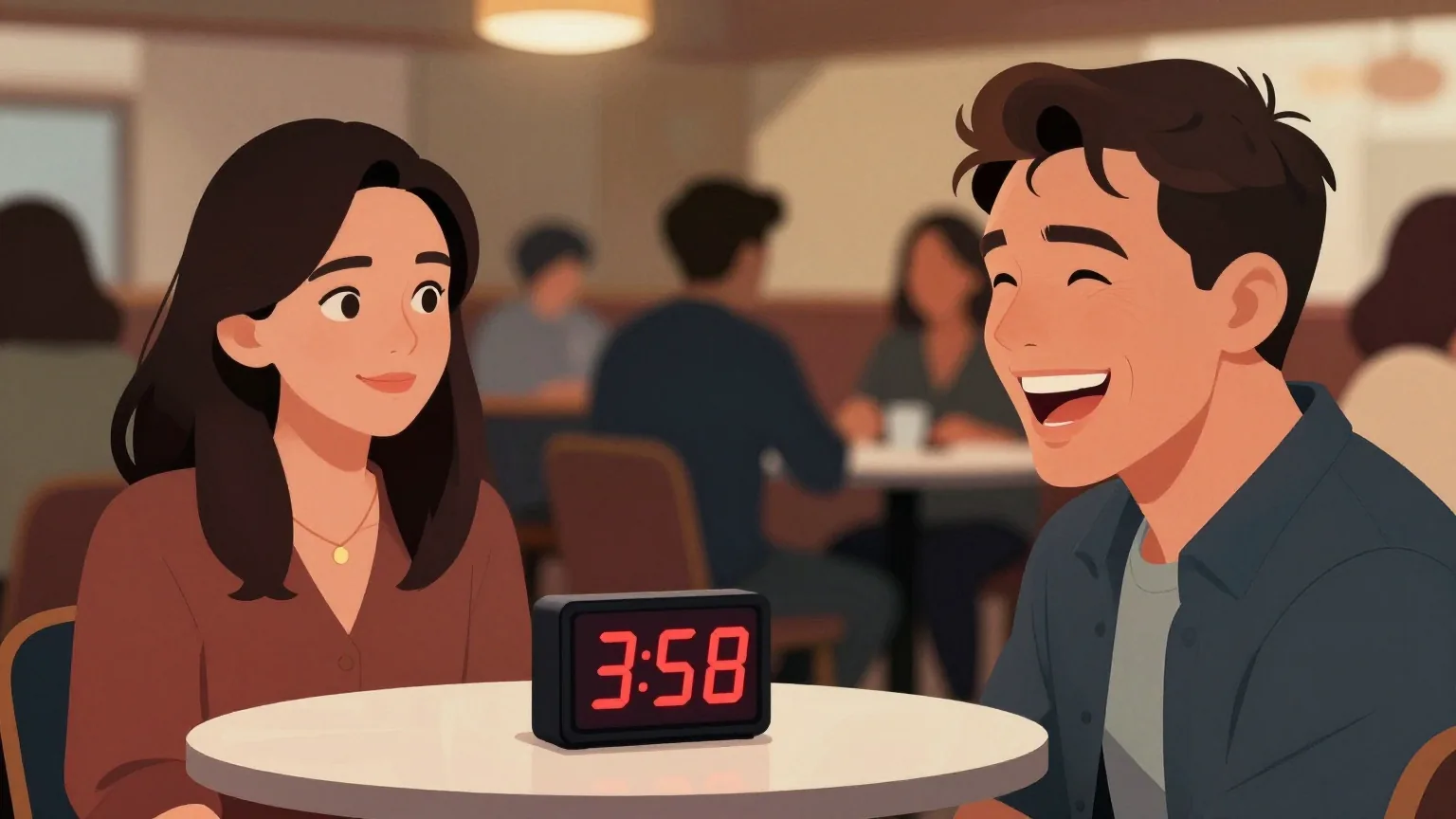
I learned that the best humor in speed dating is not stand-up comedy. It is observational, light, and inclusive. It is not about making the other person laugh at their expense, but about creating a shared moment of amusement. One date involved a conversation about our favorite terrible movies. We both agreed that Cats was the worst, and we spent the next two minutes dissecting why it was so bad. It was lighthearted, it was fun, and it revealed a lot about our shared values. We didn’t need to know each other’s bank details or political affiliations to know we would get along. Humor allowed us to bypass the formalities and connect on a human level.
Authenticity vs. The Curated Self
In the age of social media, we are all curators. We present the best version of ourselves online. We filter our photos, edit our bios, and carefully craft our digital personas. Speed dating, however, demands authenticity. You cannot curate your voice, your laugh, or your nervous fidgeting in real-time. You are there, flesh and blood, in all your imperfect glory.
I noticed that the most successful connections were those where both parties dropped their masks. When I tried to be "cool" or "impressive" in my first few dates, I felt disconnected. I was performing, not connecting. It was when I admitted that I was nervous, or when I laughed at my own mistake, that the tension broke. Authenticity is disarming. It invites the other person to be authentic in return. In a world where we are constantly projecting an image of success and perfection, the vulnerability of speed dating can be surprisingly refreshing. It allows us to be human, flawed, and real.
The Economics of Time and Attention
Speed dating is, at its core, an economic transaction. You are trading your time for the possibility of connection. In a society that values productivity and efficiency, speed dating fits the bill. It is the "fast food" of romance. But is efficiency always the right metric for love? Love is often messy, slow, and inefficient. It requires time, patience, and the willingness to sit in silence. Speed dating compresses the initial stages of dating into a few minutes. It skips the long walks, the slow dances, the gradual unfolding of a personality.
There is a cultural debate about whether this compression is damaging to our ability to form deep connections. Some argue that we are becoming "disposable" in our relationships, treating partners as interchangeable units. Others argue that speed dating is a practical tool that helps people find compatible partners faster, saving them the time and emotional energy of incompatible dates. The truth, as always, lies in the middle. Speed dating is a tool, not a solution. It is a way to meet people, not a way to build a life. It is the seed, not the tree.
Cultural Variations and Global Perspectives
Speed dating is not a monolithic experience. It varies significantly across cultures. In Japan, for example, speed dating is known as hayai and is often organized by companies or local governments to encourage marriage among young professionals. The format is similar, but the cultural context is different. In a society where marriage is often seen as a social obligation, speed dating serves a functional role in maintaining social stability.
In the United States, speed dating is often viewed as a recreational activity, a way to meet new people and have fun. It is less about finding a spouse and more about finding a friend or a casual partner. This cultural difference affects the behavior of the participants. In more traditional cultures, participants may be more focused on compatibility for long-term commitment. In more liberal cultures, participants may be more focused on immediate chemistry and fun. Understanding these cultural nuances is important when interpreting the results of a speed dating event. A "no" in one culture may have a different meaning than a "no" in another.
The Modern Application: Beyond Romance
While speed dating is most commonly associated with romance, the format has been adapted for other purposes. "Speed networking" is a popular event for professionals looking to expand their business contacts. "Speed mentoring" pairs experienced professionals with junior colleagues for brief, focused conversations. Even "speed learning" events have been created, where participants learn a new skill or topic in a short, interactive session.
The underlying principle is the same: short, structured interactions allow for efficient exchange of information and ideas. In a professional context, speed networking can be a powerful tool for building relationships. It forces you to be concise, to listen actively, and to make a lasting impression in a short time. It teaches you to value every interaction, to be present, and to follow up effectively. These are skills that are valuable in any aspect of life, not just romance.
Conclusion: The Value of the Attempt
So, did I find love? No. I didn’t find the one. I didn’t find a soulmate. I didn’t even find a great coffee date. But I found something else. I found clarity. I found confidence. I found a deeper understanding of what I want and what I don’t want. I learned that I value presence over performance, humor over pretense, and authenticity over curation. I learned that I am capable of handling rejection, and that I am more resilient than I thought.
Speed dating is not a magic bullet. It is not a guarantee of happiness. It is a tool, a mirror, and a challenge. It forces you to step out of your comfort zone, to engage with strangers, and to be vulnerable in a public setting. It is a reminder that connection is a skill, not a gift. It is something that can be practiced, refined, and improved. Whether you are looking for love, friendship, or professional connections, the lessons of speed dating are universal. Be present. Be authentic. Be curious. And don’t be afraid to say no.
So, what is your takeaway? Have you ever tried speed dating? What was your experience? Did you find love, or did you just find a new perspective on yourself? I would love to hear your stories. Share them in the comments below. Let’s celebrate the messiness, the awkwardness, and the beauty of human connection. And who knows? Maybe you’ll find the one at the next table. Or maybe you’ll just find a great story to tell. Either way, it’s worth the four minutes.